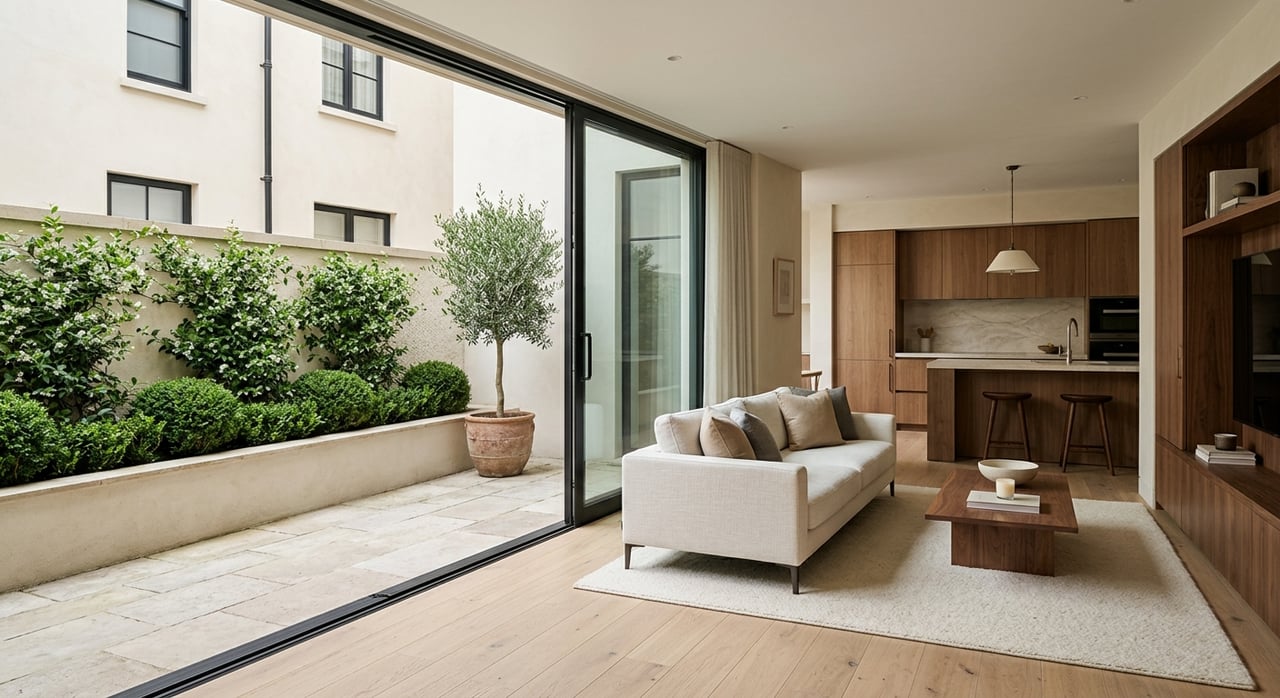
Mountain View Living Near Transit And Tech Campuses
July 23, 2026
July 23, 2026
If you want a Bay Area home that makes commuting easier without giving up daily convenience, Mountain View deserves a close look. You may be trying to balance access to major tech campuses, rail service, walkable errands, and the right kind of home for your budget and routine. The good news is that Mountain View offers a rare mix of transit connections, active public spaces, and housing options across several distinct residential areas. Let’s take a closer look.
Mountain View is a compact Silicon Valley city of just over 12 square miles, but it offers a lot within that footprint. City materials highlight its vibrant downtown and its proximity to major employers including Google, LinkedIn, Intuit, and NASA Ames.
That combination matters if you want a location that supports both work and lifestyle. Instead of choosing between a commuter-friendly spot and an active neighborhood feel, you can often find both in Mountain View.
One of Mountain View’s biggest strengths is how many ways you can get around. The city is served by Caltrain, VTA light rail, and bus routes, which gives you flexibility depending on where you work and how you like to commute.
The Mountain View Caltrain station is especially important because it functions as a multimodal hub. VTA lists Orange Line light rail service there, along with Caltrain connections, 338 parking spaces, 20 bike racks, and wheelchair boarding access.
Caltrain also serves two stops within the city: Mountain View and San Antonio. That gives residents options when comparing homes near downtown, central Mountain View, or the San Antonio area.
If your routine is not just north-south along the Peninsula, local transit still has value. VTA Route 40 connects Mountain View Transit Center with stops near Shoreline, Charleston and Google, Rengstorff, Showers, and San Antonio before continuing to Foothill College.
In practical terms, that route can be useful if you want to live near downtown or in central Mountain View while still keeping access to the North Bayshore job cluster and the El Camino and San Antonio corridor.
Mountain View also supports a bike-friendly routine. The city reports accessible sidewalks, an expanding bike lane network, and more than 10 miles of multi-use trails, including Stevens Creek Trail, Permanente Creek Trail, and Hetch Hetchy Trail.
For residents who mix biking with transit, the city also offers rent-free short-term bicycle storage at the Downtown Transit Center at Castro and Evelyn, along with bicycle lockers throughout downtown. That kind of infrastructure can make short trips and station access much easier.
If you want the most urban-style environment in Mountain View, downtown Castro Street is the center of that experience. This area combines dining, shopping, public events, and direct access to the city’s main transit hub.
What makes downtown notable is that the city is actively programming it. Mountain View launched an 18-month Downtown Entertainment Zone pilot in 2026 on Castro Street, and Music on Castro returns on Wednesdays from April through October.
The city’s downtown effort also includes outdoor patios and short-term retail activations. For you as a resident, that means downtown is not just a place to grab dinner. It is a public space designed to stay lively and engaging across the week.
Downtown also connects to broader city amenities. Visitor materials highlight the downtown shopping district, the Center for the Performing Arts, and the wider park and trail system.
That helps explain why this part of Mountain View often feels active beyond office hours. If your ideal setup includes quick access to transit, errands, dining, and events, downtown deserves attention.
Mountain View’s planning documents show a clear pattern: the city is steering more housing toward transit and job centers. That matters if you are trying to understand where future condo, townhome, and mixed-use opportunities may be concentrated.
In the current zoning update program, the city identifies the Mountain View Transit Center as a residential opportunity site with capacity up to at least 75 dwelling units per acre. Moffett Boulevard is also identified as a higher-density change area.
The San Antonio Village Center is another place linked to higher-density or mixed-use change, along with North Bayshore. These locations line up closely with where buyers are most likely to see transit-adjacent housing options.
North Bayshore is especially important for anyone thinking about Mountain View’s long-term evolution. The city approved the North Bayshore Master Plan in 2023, and the plan prepared by Google LLC with LendLease allows up to 7,000 residential units, along with office, retail, parks, and new bicycle and pedestrian improvements.
That does not just signal growth. It also reinforces Mountain View’s identity as a city where housing, jobs, and mobility improvements are being planned together.
Mountain View is not a one-note housing market. City historic context materials say postwar single-family and multi-family residences are collectively the most common property types, which helps explain why the city appeals to buyers with very different goals.
If you want lower-maintenance living near transit, condos and townhomes tend to show up more clearly around the transit center, Moffett Boulevard, North Bayshore, and San Antonio Village Center. If you want more space or a more traditional neighborhood setting, detached homes remain an important part of the market.
Recent listing examples illustrate the range. Downtown-adjacent and central Mountain View condos and townhomes have included homes such as 400 Ortega Ave Apt 216 at $785,000 for 2 bedrooms and 2 bathrooms, 108 Bryant St Apt 36 at $1,119,800 for 2 bedrooms and 3 bathrooms, and 201 Flynn Ave Apt 16 at $1,088,000 for 2 bedrooms and 3 bathrooms.
These examples show why Mountain View can appeal to buyers who want ownership near downtown, trails, and rail access without stepping immediately into detached-home pricing.
For a contrast, a recent detached listing at 1116 Doyle Place was priced at $2,998,000 for a 3-bedroom, 2-bath home with 1,888 square feet. That helps illustrate a common tradeoff in Mountain View: more space and privacy often come with a much higher price point.
If you are comparing property types, it can help to think first about your daily routine. Do you value a shorter commute and easier lock-and-leave living, or do you want more interior space, a yard, and a quieter residential feel?
Mountain View includes several residential submarkets, each with a slightly different feel and advantage. City planning and outreach materials reference areas such as Central Neighborhoods and Downtown, Grant Road and Sylvan Park, San Antonio and Rengstorff, and Monta Loma, Farley, and Rock Street.
For buyers focused on transit and tech access, a few areas stand out most clearly.
This area is a strong fit if you want to be close to Castro Street, Caltrain, VTA light rail, and a more active street environment. Housing here is often well suited to buyers who prioritize convenience and lower-maintenance living.
San Antonio benefits from its Caltrain stop and location along an important east-west corridor. It can be a practical choice if you want transit access while staying connected to shopping, services, and nearby job centers.
North Bayshore is closely tied to major employment and future mixed-use growth. It is one of the clearest examples of Mountain View’s long-term planning around housing, parks, and bike and pedestrian improvements.
The city’s historic context survey identifies Old Mountain View and Shoreline West as notable residential areas. These locations can be helpful to explore if you want a downtown-adjacent setting with more of a neighborhood feel.
This area is useful to consider if your routine involves the San Antonio corridor or access across central Mountain View. It reflects the city’s mix of established residential areas and practical transit connections.
This is another example of how Mountain View is made up of distinct residential areas rather than a single downtown core. For buyers who want to compare home styles, lot patterns, and neighborhood layout, it can be worth exploring alongside the more transit-centered districts.
If you are home shopping in Mountain View, start with your real daily patterns. The best location for you may depend less on distance alone and more on whether you expect to use Caltrain, VTA, bike routes, or a car most often.
A few questions can help narrow the search:
Clear answers to those questions can make your search much more strategic.
Mountain View can look simple on a map, but the housing choices are nuanced. Small differences in station access, neighborhood setting, property type, and commute pattern can have a big effect on both daily life and long-term value.
That is why it helps to approach the search with a plan. When you understand how Mountain View’s transit network, downtown core, and residential areas fit together, you can make a more confident choice about where and how to buy.
Whether you are relocating for a tech role, downsizing into a more connected lifestyle, or trying to balance commute time with home features, Mountain View offers a flexible set of options. The key is matching the right area and property type to the way you actually want to live.
If you are thinking about buying or selling in Mountain View or elsewhere in Silicon Valley, Stephanie Leung offers a calm, strategic approach backed by strong market insight, thoughtful guidance, and relocation support.
Stay up to date on the latest real estate trends.

A refined, relationship-driven real estate experience rooted in strategy, discretion, and precision—delivering tailored guidance, trusted insight, and results with exceptional attention to detail.